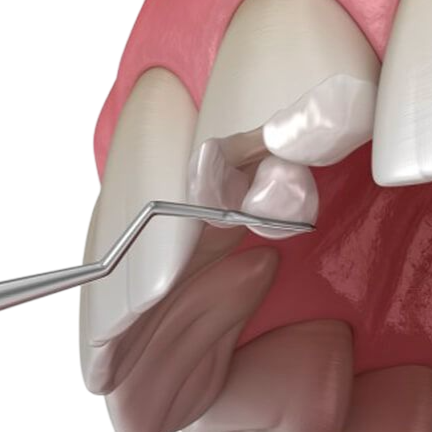
COSMETIC DENTISTRY
Tooth Bonding
Composite bonding is one of the more underappreciated tools in cosmetic dentistry — fast, conservative, and capable of producing results that genuinely surprise patients who expected a more involved procedure. Dr. Martin applies and sculpts composite resin directly onto the tooth to address chips, minor fractures, small gaps, irregular shape, mild discoloration, and exposed root surfaces from gum recession.
No laboratory fabrication is needed, which means it's completed in a single visit, typically without anesthesia. The trade-off relative to ceramic veneers is longevity — bonding usually lasts three to seven years before touching up or replacing, is more susceptible to staining over time, and wears faster in high-stress areas. For isolated corrections where the change is limited in scope, it's often the most sensible option. For more comprehensive changes involving multiple teeth, ceramic tends to hold up better. Dr. Martin discusses both options when either could reasonably apply.
What is tooth bonding, and what can it fix?
Tooth bonding involves applying and sculpting composite resin directly onto a tooth to improve its appearance — it's a conservative, same-visit procedure that can address chips, minor fractures, gaps between teeth, irregular shape, mild discoloration, and exposed root surfaces from gum recession. Because the composite is shaped and cured in-office rather than fabricated in a laboratory, there's no waiting period and typically no need for anesthesia. At our practice, bonding is our go-to for conservative cosmetic corrections where a more involved restoration isn't warranted — it's one of those treatments that produces a surprisingly significant result with minimal intervention.
How does bonding compare to veneers?
Bonding is faster, less expensive, and requires little to no removal of tooth structure — making it the more conservative choice for minor corrections. Veneers, fabricated from ceramic in a dental laboratory, are more durable, more stain-resistant, and better suited to larger or more complex changes. Bonding is an excellent option for isolated chips, small gaps, or minor shape corrections where the change is limited in scope. For more comprehensive smile improvements involving multiple teeth or significant shape and color changes, veneers typically offer a more predictable and longer-lasting outcome. At our practice, we discuss both options honestly and recommend what's genuinely appropriate for what you're trying to achieve.
How long does dental bonding last?
Composite bonding typically lasts three to seven years before it may need touching up or replacing, depending on the size of the bonding, its location in the mouth, and how well it's maintained. Bonding in high-stress areas — like the edges of front teeth in patients who grind — tends to wear faster. Bonding is also more susceptible to staining over time than ceramic veneers, particularly with coffee, tea, and red wine. At our practice, we set honest expectations about longevity at the time of treatment, and monitor bonded teeth at recall visits so we can address any wear or chipping before it becomes a more significant aesthetic concern.
Is bonding painful, and how long does the appointment take?
For most bonding procedures, no anesthesia is needed and there's no discomfort during the appointment. If bonding is being placed to cover exposed root surfaces or to repair a deep chip, mild sensitivity may be present briefly afterward, but it typically resolves quickly. Treatment time depends on how many teeth are being addressed — a single tooth can often be completed in 30 to 60 minutes. At our practice, we like to have an honest conversation about what's achievable with bonding for your specific concern before we begin, so you leave the appointment with a result that meets your expectations.
Begin with a
comprehensive evaluation.
Every patient relationship begins with a thorough assessment and an open conversation. We take the time to understand your history, concerns, and long-term goals before recommending treatment. Complete the form below and one of our team members will reach out to you soon.
Before
and after.
Explore real patient transformations made possible through Dr. Gregory Martin’s comprehensive, all-in-one approach to care. Results vary by individual. These images are provided for educational purposes and do not guarantee specific outcomes.