COSMETIC DENTISTRY
Veneers
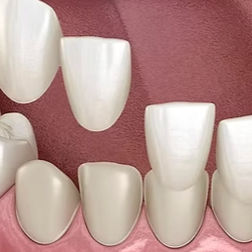
Veneers are thin ceramic shells bonded to the front surface of teeth to change their shape, color, or both. They address discoloration that doesn't respond to whitening, chips, minor misalignment, irregular size, and intrinsic staining from medications or developmental factors that no external product can reach. Dr. Martin recommends veneers when they're genuinely the right tool for the problem — not as a default cosmetic option.
Because placement requires removing a small amount of enamel from the tooth's front surface, the decision is permanent, and patients understand that clearly before anything is prepared. In some cases, minimal-prep options are appropriate; in others, they're not — and Dr. Martin makes that distinction based on the specific case rather than patient preference alone. Aesthetic planning happens before preparation, often including a preview of the planned result, so the final outcome reflects what the patient actually wanted rather than what they settled for.
What are veneers, and what concerns can they address?
Veneers are thin custom shells — typically made from porcelain or ceramic — that are bonded to the front surface of teeth to improve their appearance. They can address a range of aesthetic concerns: discoloration that doesn't respond to whitening, chips or minor fractures, slight misalignment or spacing, irregular shape or size, and worn edges. They're also a solution for intrinsic staining — discoloration within the tooth itself from medications or developmental factors — that external whitening products can't reach. At our practice, veneers are recommended when they're genuinely the most appropriate solution for the concern, and we always evaluate whether a more conservative option can achieve a comparable result first. Every veneer treatment here also includes facial laser resurfacing on the day the veneers are seated, at no additional cost — because the skin framing your smile should look as good as the teeth.
Do veneers require removing a lot of tooth structure?
Traditional veneers require a small amount of enamel removal from the tooth's front surface — typically 0.3 to 0.7 millimeters — to ensure the finished veneer sits flush and looks natural rather than bulky. This is a permanent change to the tooth, which is why veneer candidacy should be considered carefully. In some cases, minimal-prep or no-prep veneers are an option — though they're not appropriate for every situation, and a case-by-case assessment is essential. At our practice, we discuss the degree of tooth modification required for your specific case before you commit, because we believe patients should make this decision with a clear understanding of what it involves long-term.
How long do veneers last, and how do I take care of them?
With proper care, porcelain and ceramic veneers typically last ten to twenty years or longer. They're highly resistant to staining and wear-resistant in normal use, though they can chip under excessive force — particularly from biting hard objects or clenching and grinding. Patients with bruxism should discuss this with us before pursuing veneers, as unmanaged grinding significantly shortens veneer lifespan. At our practice, care instructions include avoiding habits that stress the veneers — using teeth as tools, biting ice, or opening packages — and wearing a nightguard if grinding is a concern. Regular maintenance visits allow us to monitor the margins and detect any early issues before they become problems.
Will veneers look natural?
When designed and placed well, absolutely — modern ceramic veneers are extraordinarily lifelike, with optical properties that mimic natural enamel's translucency and light response. The key to a natural result is careful planning: matching shade to surrounding teeth or designing a full smile with proper proportions, ensuring the shape reflects natural anatomy, and avoiding the uniform, over-whitened look that signals dental work rather than natural teeth. At our practice, aesthetic planning involves a detailed discussion of your goals before any preparation begins, often including a digital preview of the planned result. A veneer that looks natural is one that was designed that way from the start.
Begin with a
comprehensive evaluation.
Every patient relationship begins with a thorough assessment and an open conversation. We take the time to understand your history, concerns, and long-term goals before recommending treatment. Complete the form below and one of our team members will reach out to you soon.
Before
and after.
Explore real patient transformations made possible through Dr. Gregory Martin’s comprehensive, all-in-one approach to care. Results vary by individual. These images are provided for educational purposes and do not guarantee specific outcomes.


