RESTORATIVE DENTISTRY
TMJ Therapy
& Dental Bruxism
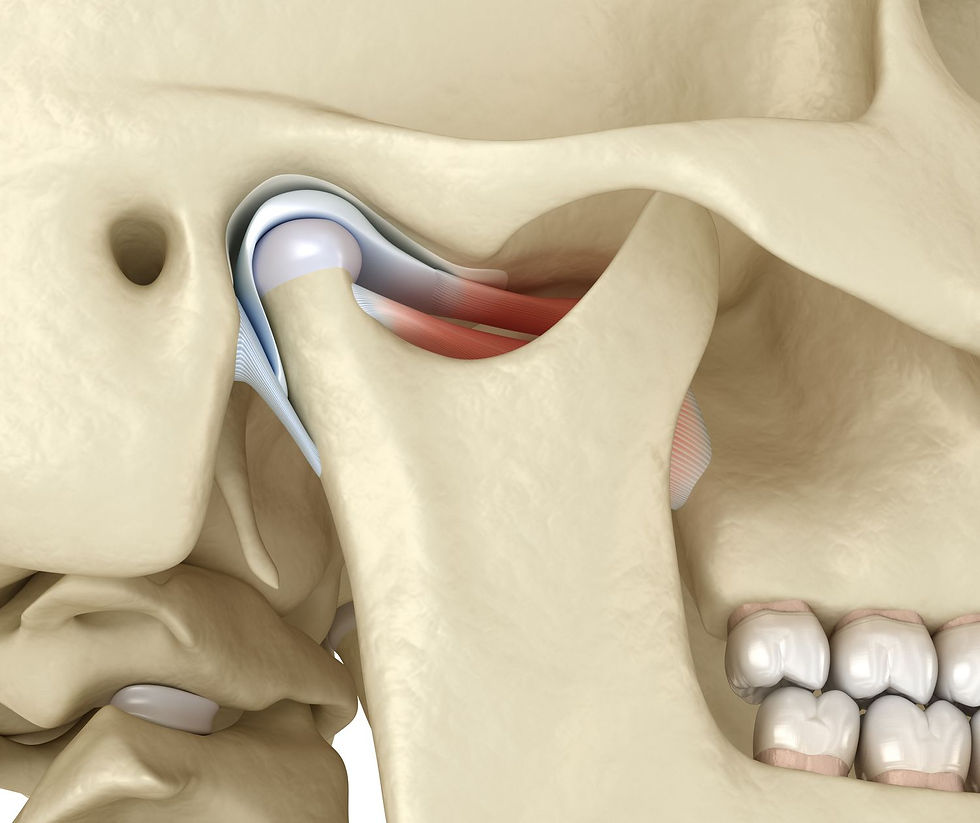
Chronic jaw tension and bruxism overload the masseter muscles, the temporomandibular joint, and the teeth — leading to wear, headaches, jaw soreness, and disrupted sleep, often for years before a patient connects the symptoms to their jaw. Dr. Martin evaluates joint health, muscle activity, and bite mechanics as part of every comprehensive exam, which means this kind of dysfunction gets identified early rather than after significant damage has accumulated.
Treatment addresses both the muscular and structural dimensions. Custom nightguards redistribute bite forces and prevent direct tooth-to-tooth contact during sleep. Occlusal therapy corrects bite imbalances that contribute to joint strain. For patients with significant muscular involvement, neurotoxin injected into the masseter reduces clenching force directly — a complement to the dental work, not a substitute for it. Dr. Martin's background in both dentistry and facial aesthetics means the full picture gets treated rather than just one side of it.
What's the relationship between bruxism and TMJ problems?
Bruxism — habitual clenching or grinding — is one of the most common contributors to TMJ dysfunction, though it's not the only cause. The masseter and temporalis muscles generate substantial force during clenching, and when that force is applied chronically — often during sleep — it overloads the joint, accelerates tooth wear, and strains the surrounding musculature. The two conditions frequently co-exist and reinforce each other. At our practice, we address both the muscular and the structural components: occlusal therapy and nightguards manage the mechanical load, while neurotoxin to the masseter can provide additional relief by reducing the force of involuntary clenching directly.
What is TMJ disorder, and what are the symptoms?
TMJ disorder — or temporomandibular dysfunction — refers to problems affecting the temporomandibular joint, the muscles that move the jaw, or both. Symptoms vary widely but commonly include jaw pain or soreness, clicking or popping sounds when opening or closing the mouth, headaches (particularly in the temples or behind the eyes), facial muscle tension, limited range of jaw motion, and tooth sensitivity or wear from clenching. Many patients don't connect these symptoms to their jaw because they've lived with them for years. At our practice, we evaluate the jaw joint, bite mechanics, and muscle activity as part of every comprehensive exam — because TMJ dysfunction is frequently underdiagnosed when care is focused narrowly on teeth.
What does treatment for TMJ and bruxism look like?
Treatment is almost always multi-layered, and what's appropriate depends on the severity and underlying drivers. A custom nightguard is frequently the starting point — it redistributes bite forces and prevents direct tooth-to-tooth contact during sleep. Occlusal therapy addresses bite imbalances that contribute to joint overload. For patients with significant muscular involvement, neurotoxin injected into the masseter reduces clenching force meaningfully and provides relief that many patients describe as the most immediate and impactful intervention they've tried. At our practice, we design a coordinated plan rather than recommending any single treatment in isolation — because TMJ and bruxism are systemic jaw problems, and they respond best to a comprehensive approach.
Will a nightguard fix my jaw pain?
A nightguard is an important part of most bruxism and TMJ treatment plans, but it's rarely the complete solution on its own — and we think it's important to be honest about that. A well-fitted custom nightguard protects your teeth from wear, reduces the mechanical load on the joint, and can relieve muscle tension over time. For some patients, this is enough to resolve symptoms. For others — particularly those with significant muscular hypertrophy or joint-level structural changes — additional intervention is needed. At our practice, we track symptoms over time and adjust the plan based on how you're responding, rather than prescribing a nightguard and considering the matter closed.
Begin with a
comprehensive evaluation.
Every patient relationship begins with a thorough assessment and an open conversation. We take the time to understand your history, concerns, and long-term goals before recommending treatment. Complete the form below and one of our team members will reach out to you soon.
Before
and after.
Explore real patient transformations made possible through Dr. Gregory Martin’s comprehensive, all-in-one approach to care. Results vary by individual. These images are provided for educational purposes and do not guarantee specific outcomes.